

In the automotive manufacturing industry, the precision of each component directly affects the safety and durability of the entire vehicle. As the key supporting components of the automotive structure, the manufacturing process of the chassis and body skin is of paramount importance. This article will deeply analyze the core technologies of automotive chassis sheet metal processing and automotive skin manufacturing, and reveal how to create high-reliability automotive components through sheet metal manufacturing processes.
Sheet metal processing: the “skeleton” and “skin” of the automotive manufacturing industry
The chassis and skin of the automobile are like the bones and skin of the human body – the chassis carries the weight of the power system and the body, and the skin resists external impact and corrosion. According to statistics, about 30% of the parts in a passenger car rely on sheet metal forming technology, while the proportion of commercial vehicles (such as buses) is as high as 45%.
Taking bus chassis processing as an example, it needs to meet three core requirements:
- High strength: carrying the weight of dozens of passengers and equipment, and extremely high fatigue resistance requirements;
- Lightweight: every 10% weight reduction can reduce energy consumption by 6%-8%;
- Weather resistance: to cope with complex road conditions and extreme temperature and humidity environments.
Chassis components manufactured through precision sheet metal processing can achieve both structural strength and lightweight design. For example, a certain brand of electric bus uses a high-strength steel laser welded chassis, which reduces the overall weight by 18% and increases the driving range by 22%.
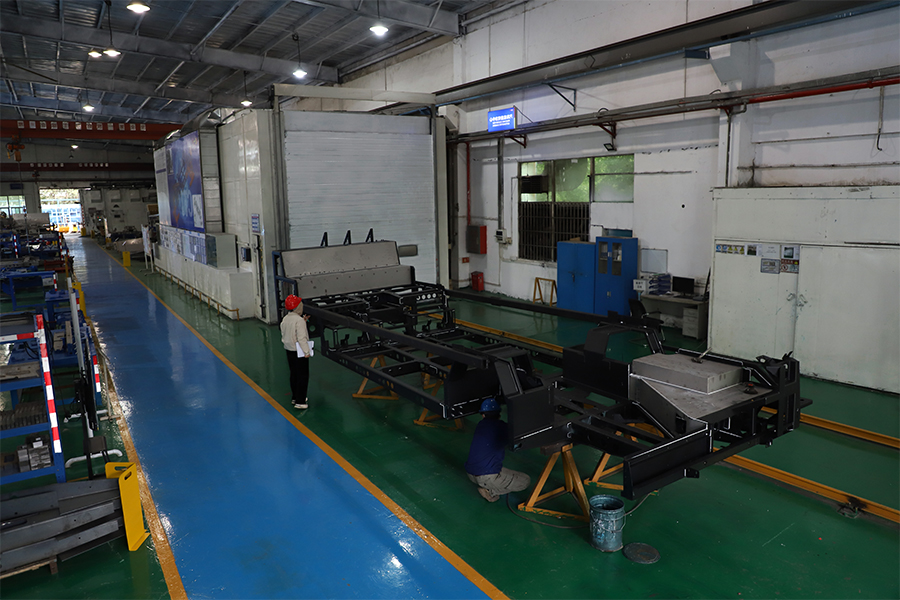
Analysis of the entire process of automobile chassis sheet metal processing
A qualified automobile chassis needs to go through four key processes:
- Laser cutting: “Surgery” with an accuracy of ±0.1mm
- Using a 6000W fiber laser cutting machine, it can process 4mm-20mm thick steel plates;
- The intelligent typesetting system increases the material utilization rate to 92%;
- CNC bending: Mechanical optimization with an angle error of less than 0.5°
Equipped with an 800-ton electro-hydraulic servo bending machine, it supports U-shaped/L-shaped complex structure forming;
- Through finite element analysis (FEA) simulation of stress distribution to avoid bending cracking;
- Technology highlights: The C-beam of the bus chassis is bent and formed in one step, reducing welding nodes by 30%.
Sheet metal welding: precise welds
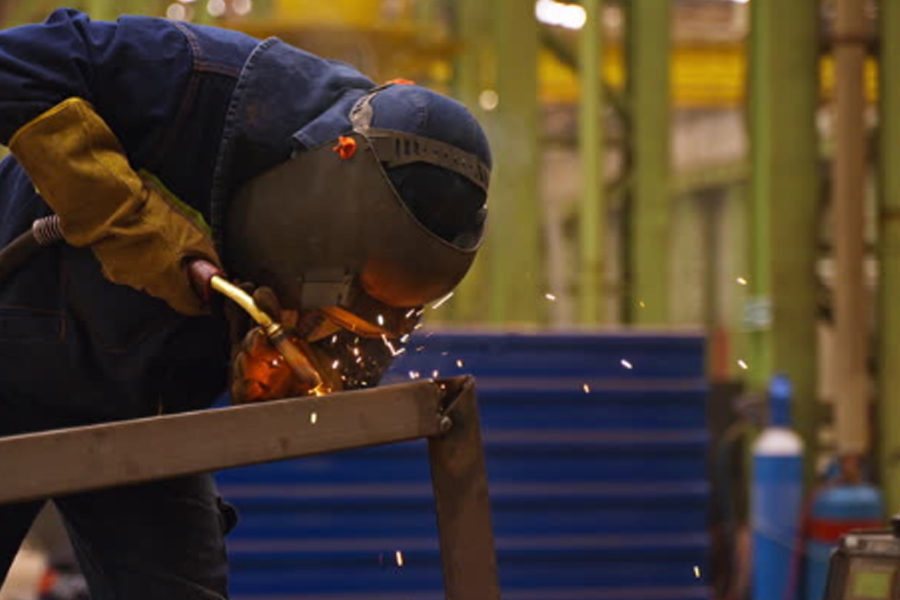
- Use welding robot arm, repeat positioning accuracy ±0.08mm;
- Use MAG welding process, penetration depth reaches 1.2 times of plate thickness;
Surface treatment: double protection to extend service life
- Electrophoretic primer + powder spraying, salt spray resistance test over 1000 hours;
- Partial Dacromet coating is used, rust prevention ability is increased by 5 times;
Automobile skin processing: the art of balancing 0.01mm level precision and corrosion resistance
As the “facade” of the vehicle’s appearance, the skin must not only maintain its beauty, but also cope with challenges such as gravel impact and acid rain corrosion.
- Material selection: From galvanized sheet to aluminum alloy
- Economical solution: 0.7mm galvanized steel sheet (SECC), low cost and scratch resistance;
- Lightweight solution: 5052 aluminum alloy, 40% lighter, suitable for new energy vehicles;
- High-end solution: Dual-phase steel (DP590), with a tensile strength of 590MPa.
Precision molding: millimeter-level control of curved surfaces.
- Adopting a multi-point flexible mold system, the curvature of the skin can be quickly switched;
Anti-corrosion process: 6-layer protection system
- Nano-ceramic pretreatment (replacing traditional phosphating, no heavy metal emissions)
- Cathode electrophoretic primer (film thickness 18-22μm)
- Intermediate coating (anti-stone impact particle content ≥40%)
- Topcoat spraying (2K varnish, UV aging resistance)
- Partial PPF film (resistance to sand and gravel impact)
- Cavity wax injection (prevent internal cavity rust)