

Laser welding is one of the most advanced methods for joining materials, particularly metals, using high-energy laser beams to create deep, precise welds. It has become indispensable in industries where high precision, speed, and minimal thermal distortion are required. Applications range from aerospace and automotive manufacturing to electronics and medical device production.
At Chuntian Technology (Thailand) Co., Ltd, we specialize in precision sheet metal fabrication and laser welding, offering high-quality solutions tailored to the specific needs of each industry. In this article, we will explore the different types of laser welding, their applications, benefits, and why it has become the go-to choice for high-performance manufacturing.
What is Laser Welding?
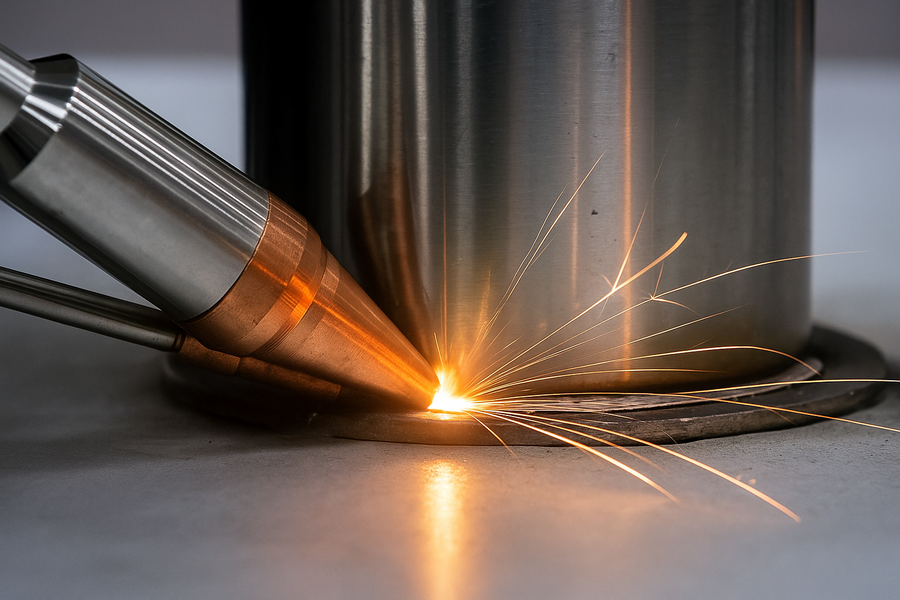
Laser welding is a process that uses focused laser light to melt and join materials. The laser beam, which is highly concentrated, focuses on a small area, causing rapid heating and allowing for the materials to melt. The molten material then cools, fuses, and solidifies, forming a strong bond.
There are several types of laser welding methods, each offering unique advantages depending on the specific materials, joint requirements, and production volumes. These methods are preferred in applications where conventional welding techniques might be too slow, inaccurate, or unable to provide the required precision.
1. Key Advantages of Laser Welding
Before diving into the specific types of laser welding, it’s important to understand why laser welding is widely favored across industries:
1.1. Precision and Accuracy
Laser welding offers superior precision compared to traditional welding techniques. The concentrated laser beam allows for fine control over the weld size and placement, which is particularly beneficial in industries like electronics and medical device manufacturing, where tiny components must be welded with tight tolerances.
1.2. Minimal Heat-Affected Zone (HAZ)
Laser welding generates minimal heat compared to other welding methods. This results in a smaller heat-affected zone, which reduces the risk of material distortion and warping. This characteristic is particularly important when working with thin materials or complex geometries.
1.3. High Welding Speed
Laser welding is a high-speed process, which allows for faster production times, especially for high-volume manufacturing. The quick welding speed is ideal for industries that require rapid, repetitive welding of components, such as automotive and aerospace.
1.4. No Need for Filler Materials
Unlike some traditional welding methods, laser welding does not require additional filler materials. The process uses the base materials to form the joint, simplifying the overall process and reducing material costs.
1.5. Automation and Precision Control
Laser welding can easily be integrated into automated systems, which is highly beneficial for large-scale production. This capability enables consistent results, improved throughput, and high repeatability, which are critical in manufacturing settings.
2. Types of Laser Welding
Laser welding is a versatile technique with different methods tailored for various materials, joint configurations, and applications. Below, we will explore the five most common types of laser welding:
2.1. Continuous Wave (CW) Laser Welding
Continuous wave laser welding uses a continuous laser beam to join materials. The laser beam is emitted continuously rather than in pulses. This type of welding is particularly useful for thick materials and is commonly used in automotive and aerospace manufacturing.
How it Works
In CW laser welding, the laser beam continuously heats and melts the material. The laser is usually focused into a small spot to melt a precise area of the material, and a filler material may be added for deeper penetration.
Applications
-
Thick materials such as steel and aluminum
-
High-volume production
-
Automotive and aerospace industries for structural components
Benefits
-
Deep penetration for welding thicker materials
-
High welding speeds
-
Ideal for large, repetitive welds
2.2. Pulsed Laser Welding
Pulsed laser welding uses laser light in short, high-intensity pulses rather than a continuous beam. This method is ideal for thinner materials and can be used for precise spot welding in industries like electronics and medical devices.
How it Works
In this method, the laser generates pulses at a predetermined frequency. The pulse creates localized heating in the material, causing the metal to melt and fuse. The process allows for precise control over the weld depth and heat input.
Applications
-
Thin-walled materials such as sheet metal
-
Electronics and medical device components
-
Small, precise joints
Benefits
-
High precision and control
-
Minimal heat-affected zone
-
Ideal for delicate components and small welds
2.3. Laser Beam Welding (LBW)
Laser beam welding (LBW) is one of the most common types of laser welding. It involves using a focused laser beam to create a weld pool, which melts and fuses materials. LBW is often used for deep penetration welding in industries requiring high strength and durability.
How it Works
The laser beam is focused onto the workpiece, generating intense heat that melts the material. The molten material then solidifies, creating a strong bond. LBW can be used in both continuous wave and pulsed laser applications, depending on the needs of the project.
Applications
-
Automotive and aerospace manufacturing for strong, durable parts
-
Welding of thick materials
-
Power generation and heavy equipment
Benefits
-
Ideal for high-strength and durable joints
-
Capable of welding thick materials
-
Minimal distortion of the workpiece
2.4. Hybrid Laser Welding
Hybrid laser welding combines the benefits of laser welding and arc welding (typically MIG or TIG). It uses both a laser beam and an arc to heat and melt the material simultaneously, improving penetration depth and welding speed.
How it Works
In hybrid welding, the laser provides the concentrated heat for deep penetration, while the arc adds filler material and provides a steady heat source. This combination ensures deep welds with high strength, even on thicker materials.
Applications
-
Heavy industry for welding thick materials
-
Automotive manufacturing for structural components
-
Shipbuilding and railroad industries
Benefits
-
Deeper penetration compared to standard laser welding
-
Faster welding speeds
-
Better weld quality on thick materials
2.5. Laser Spot Welding
Laser spot welding is a technique where a concentrated laser beam is used to create small, precise welds at specific points. The method is ideal for joining thin metals and is widely used in the electronics industry for producing compact and lightweight devices.
How it Works
Laser spot welding uses a high-intensity laser beam focused on a small area of the workpiece, melting it and joining the materials at that specific point. This process is usually fast and highly controlled, offering precise results for small parts.
Applications
-
Electronics for joining small components
-
Medical devices for tiny, delicate parts
-
Jewelry manufacturing for detailed metalworking
Benefits
-
Extremely precise, ideal for small parts
-
Minimal heat-affected zone
-
Fast and efficient for high-volume production
3. Benefits of Laser Welding
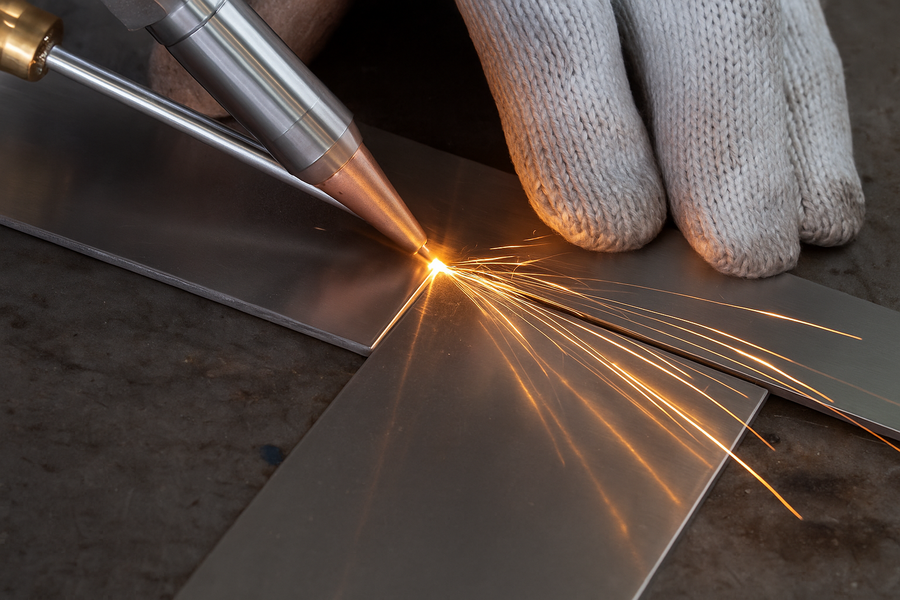
Laser welding offers several advantages over traditional welding methods. These benefits make it the preferred choice for industries that require precision, speed, and high-quality results.
3.1. High Precision and Accuracy
Laser welding provides exceptional precision, making it ideal for applications that require tight tolerances. The ability to control the size of the weld pool and the intensity of the laser beam allows for extremely accurate and repeatable welds.
3.2. Minimal Heat-Affected Zone (HAZ)
Since the laser beam is focused on a small area, the heat-affected zone is minimized. This reduces the risk of material distortion, warping, and changes in mechanical properties, ensuring that the surrounding areas of the material remain unaffected.
3.3. Faster Welding Speeds
Laser welding is a high-speed process that allows for quick material removal and rapid joint formation. This makes it ideal for high-volume production, reducing cycle times and increasing productivity.
3.4. No Need for Filler Materials
Many laser welding methods do not require filler materials, which simplifies the process and reduces costs. The laser beam can melt the base material and create a strong bond without the need for additional material.
3.5. Automation and Integration
Laser welding can be easily automated and integrated into robotic systems. This improves consistency, repeatability, and overall production efficiency, making it ideal for large-scale manufacturing operations.
How Chuntian Technology (Thailand) Co., Ltd. Can Help
At Chuntian Technology (Thailand) Co., Ltd, we specialize in providing high-quality laser welding services for a variety of industries, including automotive, aerospace, medical, and electronics. With our advanced equipment and experienced team, we can deliver precision welding solutions that meet the most demanding requirements.
Our Laser Welding Capabilities
-
Advanced Laser Welding Machines for various welding techniques
-
Expert Technicians trained in the latest welding methods
-
Customized Solutions to meet your specific manufacturing needs
-
High-Volume Production capabilities for fast turnaround times
We are committed to providing cost-effective, high-precision welding services that improve the quality and durability of your components. Whether you are in need of prototype development or high-volume manufacturing, Chuntian Technology is your trusted partner for all your laser welding needs.
Contact us today to learn more about our laser welding services and how we can help you achieve the precision and quality you require for your next project.