

Stainless steel is one of the most versatile materials used in modern manufacturing. Known for its corrosion resistance, strength, and clean appearance, stainless steel can be found in industries as varied as food processing, medical equipment, architecture, automotive, and consumer goods.
But stainless steel’s performance and aesthetics don’t just depend on its grade or composition. The surface finish applied to the metal can dramatically impact its appearance, corrosion resistance, hygiene, and suitability for specific applications.
For procurement professionals, engineers, and manufacturers, understanding the different types of stainless steel surface finishes, and knowing how to choose the right one is critical. This guide explores the most common finishes, their benefits, and how to select the best option for your projects.
What Are Stainless Steel Surface Finishes?
A stainless steel surface finish is the result of a specific physical or chemical treatment applied to the surface of the steel. This process alters the surface’s texture, roughness, and appearance to achieve desired aesthetic and functional properties. The initial “finish” of stainless steel is determined at the mill during its production, but this is often just the starting point for a vast array of secondary, more specialized finishes.
The purpose of applying a finish extends far beyond simple aesthetics. It is a crucial step in the fabrication process that tailors the steel to its end-use environment. These finishes can be broadly categorized into three main types:
- Mechanical Finishes: These are achieved by physically abrading, polishing, or blasting the steel surface with abrasive materials. This category includes some of the most common finishes, like brushed and mirror polishes. The process removes material and creates a specific texture.
- Chemical and Electrochemical Finishes: These finishes use chemical reactions to alter the surface. Processes like passivation and electropolishing don’t add a coating; instead, they modify the steel’s own surface layer to enhance its properties, particularly corrosion resistance and smoothness.
- Coating-Based Finishes: These involve applying a distinct layer of another material onto the stainless steel surface. This includes processes like powder coating or Physical Vapor Deposition (PVD), which are used to add color, increase wear resistance, or provide an additional protective barrier.
The selection of a finish is critical across numerous industries. In food processing and pharmaceuticals, an ultra-smooth, non-porous finish is essential to prevent bacterial growth and comply with strict hygiene standards. In architecture, finishes are chosen for their visual appeal, light reflectivity, and ability to withstand weathering. For marine applications, the primary driver is maximum corrosion resistance against saltwater. Understanding these distinctions is the first step toward mastering material specification.
Why Is Surface Finish So Important?
Choosing a surface finish is not merely a final touch; it is a fundamental design and engineering decision with far-reaching implications for a product’s lifecycle, performance, and cost-effectiveness.
1. Protection Against Corrosion and Wear
Stainless steel’s “stainless” quality comes from a thin, invisible, and self-healing passive layer of chromium oxide () that forms on its surface. The integrity of this layer is the primary defense against corrosion. A rough, poorly finished surface can have microscopic peaks and valleys that trap contaminants, chlorides, and moisture, creating sites where corrosion can initiate and compromise the passive layer. Conversely, smooth, clean finishes like electropolishing actively remove surface impurities and enhance the formation of a thicker, more uniform passive layer, dramatically improving corrosion resistance.
2. Impact on Appearance and Branding
Aesthetics are a powerful tool in product design and branding. The surface finish of a stainless steel product communicates a message.
- No. 8 Mirror Finish: Conveys luxury, high technology, and pristine cleanliness. It is often used in high-end architectural elements, decorative art, and premium consumer products.
- No. 4 Brushed (Satin) Finish: Offers a sophisticated, modern, and practical appearance. Its fine lines help to conceal fingerprints and minor scratches, making it a favorite for kitchen appliances, elevator panels, and commercial fixtures.
- Bead-Blasted Matte Finish: Creates a soft, non-reflective, and uniform look. It is ideal for applications where glare is undesirable or where a subtle, contemporary aesthetic is required.
The chosen finish becomes an integral part of a brand’s visual identity, influencing customer perception and product value.
3. Functional Roles in Performance
Beyond protection and looks, surface finish plays a direct functional role.
- Hygiene and Cleanability: In sanitary applications (food, dairy, medical), a smooth surface is non-negotiable. The smoother the surface (lower , or Roughness Average), the fewer microscopic crevices exist for bacteria to colonize. Finishes like 2B and, particularly, electropolished surfaces, are exceptionally easy to clean and sterilize.
- Reduced Friction: In applications with moving parts, a polished, smooth surface can reduce the coefficient of friction, leading to improved efficiency and reduced wear over time.
- Adhesion and Bonding: Conversely, for applications requiring a coating or adhesive, a slightly roughened surface can provide a better mechanical “key” for the coating to bond to, ensuring better adhesion and longevity.
4. Regulatory Compliance
For many industries, surface finish is not a choice but a requirement dictated by regulations and standards.
- Food-Grade: Agencies like the FDA have guidelines for food contact surfaces. While they don’t always mandate a specific finish number, the requirement is for a surface that is smooth, non-porous, corrosion-resistant, and easily cleanable. The No. 4 finish is often considered a minimum standard, with smoother finishes preferred.
- Medical-Grade: For medical implants and surgical tools, biocompatibility and sterility are critical. Electropolishing is often a mandatory step as it removes surface contaminants and creates a passive, hygienic surface that minimizes reaction with the human body.
Failing to meet these standards can result in rejected products, regulatory fines, and significant liability.
What Are the Most Common Types of Stainless Steel Surface Finishes?
Understanding the standard nomenclature for finishes is essential for clear communication between designers, suppliers, and fabricators. Here is a breakdown of the most prevalent finishes, from the basic mill-produced options to highly specialized treatments.
1. Mill Finishes
These are the foundational finishes produced during the manufacturing of the stainless steel coil or sheet at the steel mill. They are generally the most cost-effective options.
- No. 1 Finish: A rough, dull, and non-uniform finish resulting from hot rolling the steel to the desired thickness, followed by annealing (heat treatment) and pickling (acid cleaning to remove scale). It’s primarily used in industrial applications where appearance is not a concern, such as furnace parts, air heaters, and structural components.
- 2B Finish: The most widely used stainless steel finish in the world. It starts as a hot-rolled sheet, which is then cold-rolled, softened, pickled, and given a final light pass through polished rolls. This creates a smooth, moderately reflective, and uniform grey surface. 2B is the versatile workhorse of the industry, serving as the starting point for many polished finishes and being suitable for a vast range of applications from food equipment to chemical tanks.
- BA (Bright Annealed) Finish: This is a highly reflective, mirror-like finish produced by cold rolling and then annealing the steel in a controlled atmosphere furnace (e.g., hydrogen or nitrogen). This process prevents the formation of oxide scale, preserving the steel’s bright, reflective surface from the cold-rolling stage. While not as perfectly clear as a No. 8 mirror polish, BA finish is often used for decorative trims, kitchenware, and architectural details where a high-gloss look is desired without the cost of mechanical polishing.
2. Mechanical Finishes
These finishes are created by mechanically abrading the surface with abrasives. The grit of the abrasive determines the final appearance.
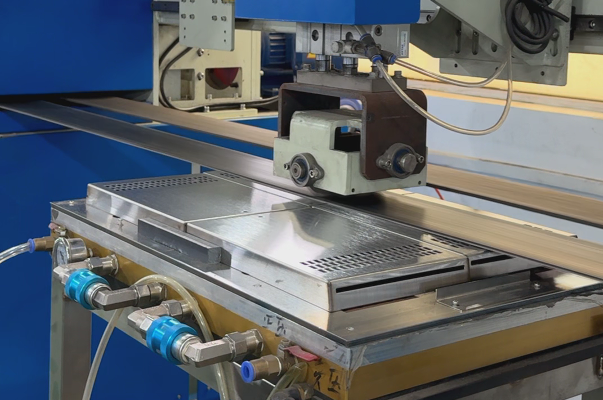
- No. 4 Brushed (Satin) Finish: This is arguably the most recognizable “architectural” finish. It is produced by polishing a 2B surface with progressively finer abrasive belts (typically 120-320 grit). The result is a surface with fine, parallel polishing lines and a muted sheen. Its key advantage is its ability to mask minor scratches and fingerprints, making it extremely practical for high-traffic areas like elevator interiors, kitchen appliances, and commercial countertops.
- No. 8 Mirror Finish: The pinnacle of reflective finishes. It is highly labor-intensive, requiring a multi-step process of grinding, buffing, and polishing with extremely fine abrasives and buffing compounds. The process removes all surface imperfections and polishing lines, resulting in a true mirror with exceptional clarity and reflectivity. No. 8 finish is used for decorative surfaces, architectural columns, mirrors, reflectors, and in cleanrooms where its perfectly smooth surface aids in monitoring cleanliness.
Other numbered mechanical finishes exist (e.g., No. 3, No. 5, No. 6, No. 7) that represent intermediate stages of polishing and are used for specific applications, but No. 4 and No. 8 are the most common specifications.
3. Bead-Blasted or Textured Finishes
Instead of abrading with belts, these finishes are created by propelling a medium (like glass beads, ceramic spheres, or sand) against the steel surface at high velocity.
- Bead Blasting: This process uses fine glass beads to create a soft, uniform, non-directional matte finish. It produces a clean, low-glare surface that is aesthetically pleasing and resistant to showing fingerprints. It is widely used in architectural applications, interior design, and for creating a satin look on fabricated parts without the directional lines of a brushed finish.
4. Chemical and Electrochemical Finishes
These advanced finishes modify the surface chemistry for superior performance.
- Passivation: This is a critical post-fabrication chemical treatment, especially after welding or machining. The process uses a mild oxidant, typically a nitric acid or citric acid solution, to remove any free iron and other contaminants left on the surface from fabrication tools. This removal of foreign material allows the stainless steel to form its robust, passive chromium oxide layer more effectively, significantly enhancing its corrosion resistance. Passivation does not change the appearance of the steel but is essential for restoring its “stainless” properties.
- Electropolishing: This is an electrochemical process often described as “reverse electroplating.” The stainless steel part acts as the anode in an electrolytic cell and is submerged in a blended acid electrolyte. An electric current is passed through the part, causing a microscopic layer of the surface material to dissolve. This action preferentially removes the “peaks” of the surface texture faster than the “valleys,” resulting in an incredibly smooth, bright, and ultra-clean surface. Electropolishing is the gold standard for high-purity applications in the medical, pharmaceutical, semiconductor, and food processing industries due to its exceptional cleanability and corrosion resistance.
5. Coating-Based Finishes
These finishes involve applying a new layer to the surface.
- Powder Coating: A dry powder polymer is applied electrostatically to the surface and then cured under heat. This creates a hard, durable, and decorative finish that is more robust than conventional paint. It is an excellent way to add color to stainless steel parts.
- PVD (Physical Vapor Deposition): A sophisticated vacuum coating process where a thin film of metal or ceramic is deposited onto the steel surface. PVD can produce a wide range of colors (gold, black, bronze, rose gold) and creates a finish that is extremely hard, wear-resistant, and corrosion-resistant. It is commonly used on luxury watches, high-end faucets, and cutting tools.
How to Select the Right Finish for Your Application?
Choosing the optimal finish requires balancing four key factors: environment, aesthetics, hygiene, and cost. Asking the right questions will guide you to the best choice.
- 1. What is the operational environment?
- Indoor, controlled environment: A standard 2B or No. 4 finish is often sufficient.
- Outdoor, urban/industrial: A smoother finish (like BA or polished) is better at resisting atmospheric pollutants. A No. 4 finish is acceptable but may require more frequent cleaning.
- Marine or coastal environment: High chloride exposure demands maximum corrosion resistance. Electropolishing or a high-quality PVD coating over a suitable stainless grade (like 316L) is highly recommended.
- Exposure to harsh chemicals: Passivation is essential. Electropolishing provides the ultimate chemical resistance.
- 2. What are the aesthetic requirements?
- Luxury, high-end look: No. 8 mirror polish is the clear choice. PVD coatings offer unique, colored metallic finishes.
- Modern and practical: No. 4 brushed finish is a perfect balance of aesthetics and functionality.
- Subtle, non-reflective: A bead-blasted matte finish is ideal.
- Purely functional/hidden component: A 2B mill finish is the most economical and practical option.
- 3. What are the hygiene standards?
- General food service: A No. 4 finish is often considered the minimum acceptable standard.
- Food processing, dairy, and beverage: A 2B or BA finish provides a smoother, more cleanable surface.
- Pharmaceutical, medical, or semiconductor cleanrooms: Electropolishing is the industry standard due to its ultra-smooth, crevice-free, and highly passive surface.
- 4. What are the cost and maintenance considerations?
- Cost: Finishes can be ranked by cost from lowest to highest: Mill Finishes (2B) < Brushed (No. 4) < Bead Blasted < Bright Annealed (BA) < Electropolishing < Mirror Polish (No. 8) < PVD Coating.
- Maintenance: A No. 4 brushed finish is excellent at hiding scratches and smudges. Mirror finishes require careful cleaning to avoid scratching. Bead-blasted finishes are also good at hiding wear.
What Are the Standards and Classifications?
To ensure global consistency and quality, stainless steel finishes are governed by international standards. Adhering to these standards is critical for international procurement and guarantees that a specified finish from one supplier matches the quality from another.
- ASTM (American Society for Testing and Materials): The most common standard in North America. ASTM A480/A480M is the key specification that defines the finishes for flat-rolled stainless and heat-resisting steel plate, sheet, and strip. It is the source of the familiar “No. 4” and “No. 8” designations.
- EN (European Norm): The standard used across Europe. EN 10088-2 defines the surface finishes for general-purpose stainless steel sheet/plate and strip. Its designations use a combination of numbers and letters (e.g., 2B, 2J, 2K). For example, a European “2J” finish is broadly comparable to an American ASTM No. 4 finish.
- ISO (International Organization for Standardization): ISO standards aim to create a single global framework, though ASTM and EN standards remain dominant in their respective regions.
When you work with a knowledgeable supplier like Chuntian Technology, you can be confident that the specified finish, whether it’s an ASTM No. 4 or an EN 1J, will be produced to the exact requirements of that standard. This precision eliminates ambiguity in technical drawings and purchase orders, ensuring you get exactly what you need.
How Do Surface Finishes Impact Fabrication and Post-Processing?
The choice of finish has direct consequences on how the material must be handled during fabrication.
- Cutting, Bending, and Forming: High-value finishes like No. 4, BA, or No. 8 are typically supplied with a protective PVC or laser film. This film must be kept on for as long as possible during fabrication processes like laser cutting, punching, and bending to prevent scratches and tool marks.
- Welding: Welding will inevitably damage the surface finish in the heat-affected zone (HAZ), discoloring it and destroying any polished or brushed pattern. Post-weld finishing is a critical step that involves grinding the weld smooth, then blending the area with abrasives to match the original finish. After this, the entire part must be cleaned and re-passivated to restore corrosion resistance, which is compromised by the heat of welding.
- Downstream Treatments: The initial surface finish can affect subsequent processes. For example, electropolishing is more effective and uniform on an already smooth surface like a BA or 2B finish. A specific surface roughness might be required to ensure proper adhesion for powder coating or painting.
- Handling and Transport: Finished components, especially those with mirror or brushed surfaces, require meticulous handling, careful wrapping, and secure packaging to prevent damage during transit. The perfect finish is worthless if it arrives at the customer’s site scratched or dented.
Elevate Your Project with Chuntian Technology’s Finishing Expertise
Navigating the complexities of stainless steel surface finishes requires expertise and a commitment to quality. At Chuntian Technology, we are more than just a sheet metal machining service; we are your strategic partner in fabrication. Located in the heart of Thailand’s dynamic manufacturing sector, we provide world-class finishing services to meet the most demanding specifications.
Our in-house capabilities include:
- Precision Brushing and Graining (No. 4 and Custom Satin Finishes)
- High-Luster Polishing (Up to No. 8 Mirror Finish)
- Professional Weld Blending and Finishing
- Chemical Passivation to ASTM A967 Standards
- Collaboration with trusted partners for specialized finishes like Electropolishing and PVD.
We have a proven track record of serving industries where finish is paramount, including medical equipment, commercial food service, architectural fabrication, and high-end consumer products. Whether you need a single prototype with a flawless mirror polish or a high-volume production run of consistently brushed components, our team has the skill and technology to deliver.
Don’t let the wrong finish compromise your product’s performance, appearance, or compliance. Choose a partner who understands the science and art of stainless steel.
Ready to elevate your next project with the perfect stainless steel finish? Contact the experts at Chuntian Technology today for a no-obligation consultation or a detailed quote. Let’s build excellence together.