

In the food industry’s production and distribution process, label coding is a crucial link in ensuring product traceability and compliant circulation. The stable operation and accurate printing of food label inkjet printers rely heavily on the high performance of their core components, and the professionalism of these components directly determines the equipment’s adaptability and reliability in food production scenarios. This article will objectively analyze the core component composition of food label inkjet printers and discuss the key requirements that component processing must meet, providing a reference for industry understanding.
Core Component Composition of Food Label Inkjet Printers
The working logic of food label inkjet printers revolves around “precise ink supply, stable transmission, clear printing, and intelligent control.” The core components encompass the following categories, and their collaborative action ensures coding quality and equipment stability:
Printhead Assembly: The printhead is the core execution component of the inkjet printer, directly determining the clarity and accuracy of the coding. The printhead of a food label inkjet printer needs to be compatible with different food label materials (such as paper, plastic film, etc.) and typically includes sub-components such as nozzles, piezoelectric crystals/solenoid valves, and printhead chambers. The nozzles atomize the ink into tiny droplets. Piezoelectric crystals or solenoid valves control the spray frequency and direction of these droplets, ensuring accurate printing of characters, barcodes, production dates, and other information onto the label surface.
Ink System Components: The ink system is crucial for ensuring a stable ink supply and mainly includes components such as the ink pump, filter, ink tube, and ink tank. The ink system components of a food label inkjet printer must have excellent sealing and corrosion resistance to prevent ink leakage and contamination of food or labels. The filter must effectively intercept impurities in the ink to prevent nozzle clogging; the ink pump must provide stable pressure to ensure uniform ink delivery and avoid problems such as ink gaps or blurry printing.

Control Module: The control module is like the “brain” of the inkjet printer, consisting of a motherboard, display screen, operation panel, and driver chip. Its core function is to receive printing commands (such as content editing and printing speed adjustment) and control the printhead spraying and the operation of the transmission mechanism. In food production scenarios, the control module must support rapid parameter adjustments to adapt to the high-speed operation of the production line, while also possessing a certain degree of anti-interference capability to prevent operation from being affected by the workshop environment (such as voltage fluctuations and dust). Transmission and Positioning Components: These components include conveyor belts, synchronous pulleys, motors, and positioning sensors. Their main function is to accurately transport food labels or labeled products to the printing area and ensure consistent printing position. Positioning sensors must accurately capture label position signals and feed them back to the control module to trigger the printing action; the motor and synchronous pulleys must provide a stable transmission speed, matching the production line rhythm to avoid problems such as inkjet offset and duplicate printing.
Auxiliary Protective Components: Considering the hygiene requirements of food production workshops, inkjet printers are also equipped with auxiliary components such as protective housings, dust covers, and sealing gaskets. Protective housings must be easy to clean to prevent dust and oil accumulation; sealing gaskets are used at ink paths and electrical interfaces to ensure the internal dryness and cleanliness of the equipment and prevent contaminants from contacting food-related areas.
Core Requirements for Inkjet Printer Component Processing
The application scenarios of food label inkjet printers demand extremely high standards of hygiene, stability, and accuracy. This dictates that the processing of inkjet printer components must meet the following key standards to ensure both equipment performance and compliance with food industry regulations:
1. Material Selection Meets Hygiene and Compatibility Standards
Components in contact with ink (such as ink tubes, ink tanks, and printhead chambers) must be made of corrosion-resistant, odorless materials that do not chemically react with ink. Common materials include food-grade stainless steel and PTFE (polytetrafluoroethylene), preventing the release of harmful substances that could contaminate the ink or label.
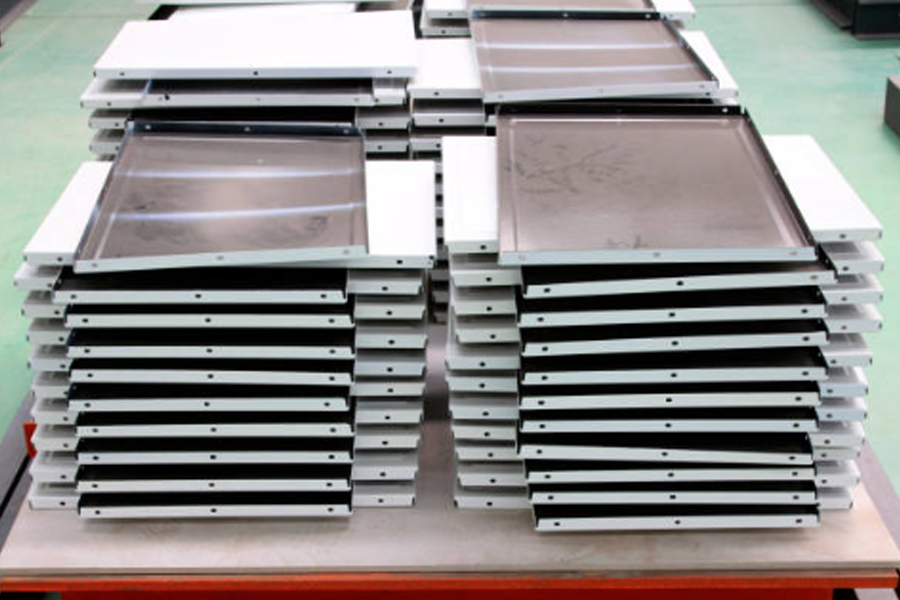
Transmission and protective components must be made of wear-resistant and rust-resistant materials, while also meeting the cleanliness requirements of food processing workshops. Surfaces must be smooth and free of dead corners for easy daily cleaning and disinfection.
2. Processing Precision Ensures Printing and Operational Stability
The orifice diameter of the printhead nozzles must be controlled at the micron level to ensure uniform ink droplet size and clear character edges. The installation precision of piezoelectric crystals or solenoid valves directly affects the jetting response speed, requiring precision machining to ensure component fit.
Dimensional tolerances of transmission components (such as synchronous pulleys and motor shafts) must be strictly controlled to avoid speed fluctuations due to component wear or excessive clearance, which could affect printing position accuracy.
3. Sealing and Durability Adapt to Production Environment: The processing of ink path system components must prioritize sealing. Interfaces should employ precision welding or sealed structures to prevent ink leakage. Simultaneously, components must withstand long-term ink immersion to avoid aging, cracking, and other problems.
Food production lines typically operate continuously for 24 hours. Components must possess high strength and durability. Optimized processing techniques (such as heat treatment and surface hardening) can improve fatigue resistance and reduce equipment failure rates and maintenance frequency.
4. Compatibility and Standardization for Easy Adaptation and Replacement: Component processing must adhere to industry-standard processes to ensure interchangeability between different batches and models, facilitating future maintenance and replacement for users.
Core components of the control module (such as driver chips and interfaces) must be compatible with mainstream inkjet printing software and production line control systems to reduce equipment integration difficulty and adapt to the production needs of food companies of different sizes.
5. Environmental Protection and Compliance Alignment with Industry Standards
The processing of components must avoid the use of raw materials and processing aids containing heavy metals and toxic or harmful substances, complying with environmental standards such as RoHS.
Protective and transmission components that may indirectly come into contact with food must pass relevant food industry hygiene certifications to ensure that the processing procedures and finished product quality meet the compliance requirements of food production.
The stable operation of food label inkjet printers is a crucial guarantee for compliant distribution and traceability management in the food industry, and the core foundation of all this lies in high-quality inkjet printer component processing. From the functional adaptation of core components to the standard control of processing techniques, every step directly affects the printing effect, operational stability, and service life of the equipment.
With the food industry’s ever-increasing demands for safety, efficiency, and accuracy, inkjet printer component processing must continuously focus on material optimization, precision improvement, and compliance adaptation to meet the diverse needs of production scenarios. In the future, with the integration of intelligent manufacturing technologies, inkjet printer component processing will develop towards greater precision, durability, and environmental friendliness, providing solid support for the upgrading and iteration of food label inkjet printing equipment.