

In modern sheet metal welding systems, laser cutting technology, with its superior precision, efficiency, and flexibility, has become an indispensable core pre-process. It fundamentally optimizes the manufacturing chain from material preparation to forming, directly improving cutting quality and laying a high-quality foundation for subsequent welding processes. It is key for enterprises to achieve cost reduction, efficiency improvement, and high-quality manufacturing.
Analysis of the Core Technological Advantages of Laser Cutting
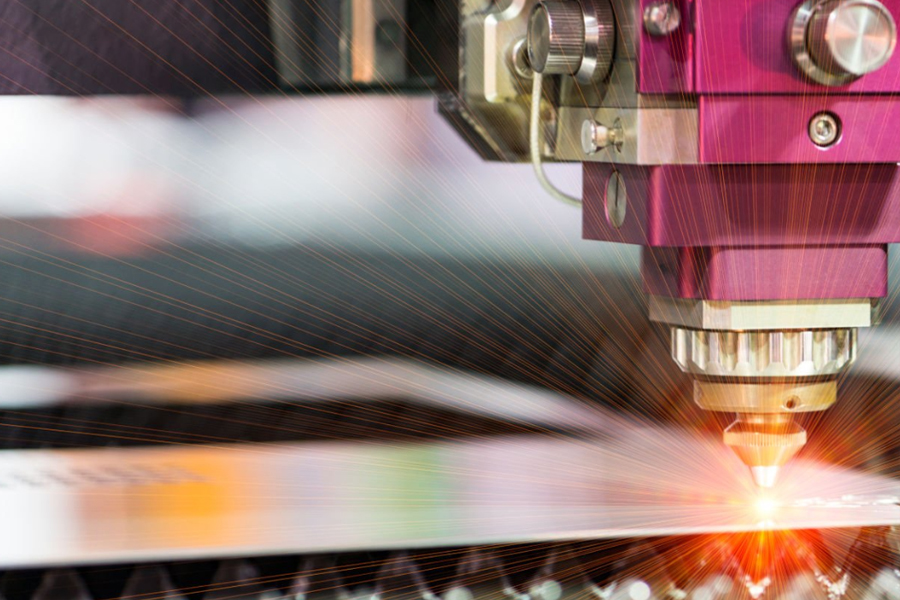
Laser cutting technology uses a focused high-energy-density laser beam to instantly melt or vaporize materials, supplemented by auxiliary gas to remove slag, achieving precise separation. This principle gives it significant advantages over traditional cutting methods:
Ultra-high precision and superior cut quality: Laser cutting can achieve micron-level precision, resulting in smooth, burr-free cuts with a minimal heat-affected zone. This directly brings two major benefits: firstly, it significantly reduces the amount of secondary finishing work before welding; secondly, the smooth cut provides an ideal joint surface for subsequent welding, significantly improving weld formation quality and structural strength.
Extreme processing efficiency and flexibility: As a non-contact processing method, laser cutting speed far exceeds that of mechanical cutting and requires no mold changes. CNC programming allows for instant switching between different graphics, perfectly adapting to diverse product types, small batches, and even personalized customization needs, significantly shortening product delivery cycles.
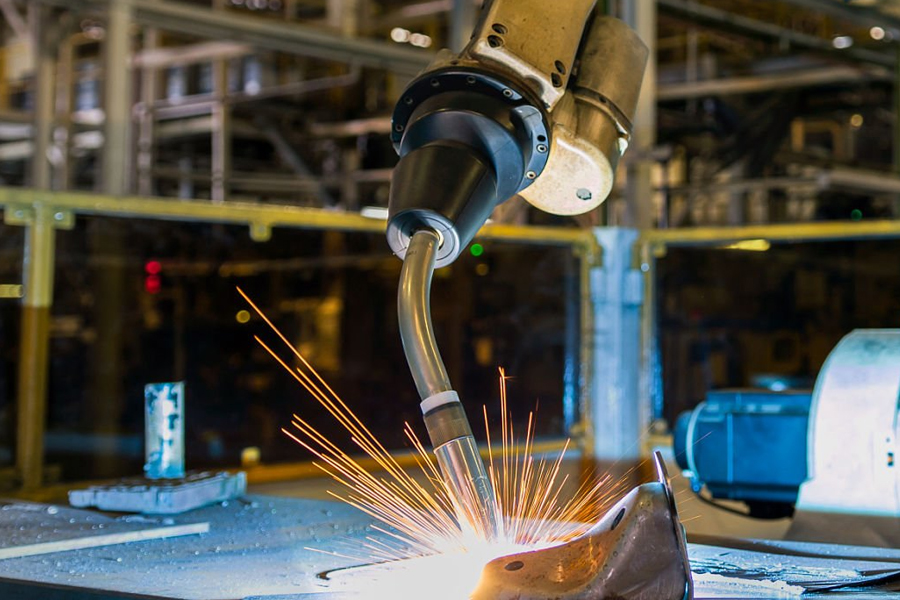
Significant cost reduction and material savings: Efficient CNC nesting software maximizes material utilization and reduces waste. Simultaneously, automated processing reduces manual intervention, lowering direct labor costs while improving production safety and consistency.
Key Equipment Selection: CO₂ Laser vs. Fiber Laser
The choice of laser directly determines processing capacity and economics. Current mainstream choices fall into two categories:
Fiber lasers: Currently the absolute mainstream for cutting thin to medium-thick plates. They boast high photoelectric conversion efficiency (up to 2-3 times that of CO₂ lasers), low maintenance costs, and excellent beam quality. They are particularly adept at cutting highly reflective metals (such as copper and aluminum) as well as carbon steel and stainless steel, exhibiting a significant efficiency advantage in processing materials thinner than 20mm.
CO₂ lasers: Still used for cutting thicker non-metallic materials or certain specific metals. Their longer wavelength results in smoother cut surfaces on some materials.
Selection should be based on a comprehensive consideration of the main processing material types, thickness ranges, production cycle requirements, and investment budget to achieve the best cost-effectiveness.
Systematic Solutions to Improve Overall Welding Efficiency: Deeply integrating laser cutting into the production system can optimize sheet metal welding efficiency globally:
Pre-process optimization: Utilizing the high precision of laser cutting, precise beveling of connection parts can be achieved in one step, simplifying the welding process. Simultaneously, reducing the number of parts through nesting or optimizing weld bead design reduces welding workload from the source.
Seamless integration with automation: Laser cutting machines can be integrated with automated loading and unloading, AGV transfer, and welding robots to form a continuous flow production line. Cut parts are automatically picked up and positioned to the welding station via barcode scanning or visual recognition, achieving intelligent and unmanned operation throughout the entire process from material preparation to welding.
Data-driven intelligent management: Through MES (Manufacturing Execution System) integration, parameters such as laser power and cutting speed are monitored in real time to ensure stable cutting quality. All parts have traceable processing data, providing a basis for calling welding process parameters, building a digital twin, and achieving closed-loop quality management.
Future Trends: Smarter, More Powerful, More Integrated
Laser cutting technology is rapidly evolving in the following directions:
Higher Power and Ultra-High Efficiency: The widespread adoption of 10,000-watt and even higher-power lasers enables faster cutting of thick plates. Simultaneously, processes like “bright surface cutting” can achieve mirror-like finishes on materials such as stainless steel, eliminating the need for polishing.
Intelligent and Adaptive Control: Integrated AI vision systems automatically identify sheet metal positions and defects, adjusting cutting paths and parameters in real time. Through big data learning, the equipment can self-optimize processes to address batch variations in materials.
Integrated Cutting and Welding and Composite Processing: Integrating laser cutting and welding heads on the same worktable allows for immediate welding after cutting, achieving true “one-stop” processing and greatly simplifying logistics and clamping.
Green and Sustainable: The application of lasers with higher energy efficiency ratios, intelligent power-saving modes, and environmentally friendly processing technologies makes laser cutting more aligned with the requirements of green manufacturing.
Laser cutting is far more than just a simple “cutting” process; it is the precision starting point and efficiency core of modern intelligent sheet metal welding manufacturing systems. By selecting suitable laser technologies, systematically integrating them into automated production lines, and proactively planning intelligent and multi-functional applications, manufacturing enterprises can build a quality and efficiency advantage that is difficult to replicate, thus winning the future in fierce market competition.