

Precision sheet metal manufacturing is a crucial foundational process in modern manufacturing, widely applied in electronic equipment, communication systems, medical devices, new energy, and automated equipment. It primarily uses thin metal sheets as raw materials, employing various processing techniques to transform flat metal sheets into complex, dimensionally precise components or complete machine structures with stringent assembly requirements.
The Concept of Precision Sheet Metal Manufacturing
Conceptually, precision sheet metal manufacturing emphasizes “precision” and “accuracy.” Compared to ordinary sheet metal, precision sheet metal demands higher requirements for dimensional tolerances, assembly precision, and surface quality. Even minute errors can prevent the proper installation or operation of an entire piece of equipment. Therefore, this type of manufacturing relies not only on equipment precision but also heavily on process experience and process control capabilities.
In actual production, precision sheet metal manufacturing typically begins with blanking and cutting. Using methods such as laser cutting or CNC punching, metal sheets are processed into the required shapes according to the design drawings. This stage directly determines the contour accuracy of the part and is fundamental for the smooth progress of subsequent processes. Subsequently, the metal sheet enters the bending and forming stage, where CNC bending equipment processes it into a three-dimensional structure. During this process, factors such as material thickness, bending angle, and springback need to be comprehensively considered to ensure the consistency of structural dimensions.
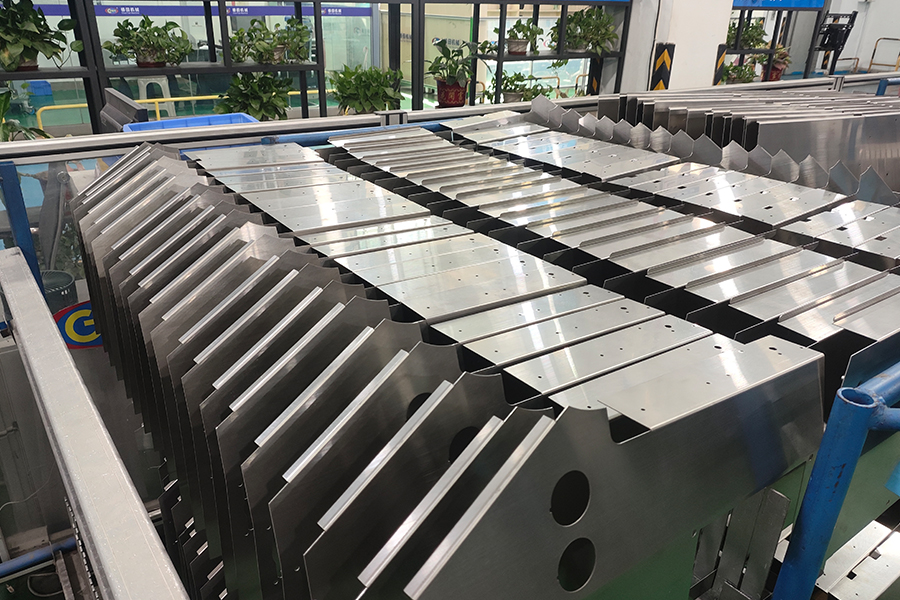
After the parts are formed, welding and assembly are often required. Welding in precision sheet metal not only requires strength and reliability but also needs to minimize thermal deformation to avoid affecting overall precision and appearance quality. After structural processing is completed, the product usually undergoes surface treatment, such as spraying, powder coating, electroplating, or anodizing, to improve corrosion resistance and appearance, meeting the needs of different application environments.
In terms of material selection, commonly used materials for precision sheet metal include stainless steel, cold-rolled steel sheet, aluminum alloy, and galvanized sheet. Different materials have different characteristics in terms of strength, weight, corrosion resistance, and processing performance, requiring appropriate selection based on the actual application scenario. Suitable materials not only improve product performance but also reduce later maintenance costs.
Application Areas of Precision Sheet Metal Manufacturing
Precision sheet metal manufacturing plays a crucial role in many industries. For example, in the communications and data center sectors, it is widely used in server chassis and equipment cabinets; in the medical industry, it is used to manufacture equipment enclosures requiring high cleanliness and reliability; and in the new energy and automation industries, it plays a crucial role in structural support and protection. These applications have extremely high requirements for safety and stability, making precision sheet metal an irreplaceable manufacturing process.
With the development of manufacturing technology, precision sheet metal is also constantly being upgraded. Digital design, automated production, and intelligent management are gradually becoming industry trends. This not only improves production efficiency and consistency but also makes customized production of complex structures possible. In the future, precision sheet metal manufacturing will continue to develop towards higher precision, higher efficiency, and greater environmental friendliness.
Overall, although precision sheet metal manufacturing belongs to the basic processing field, it has a profound impact on product quality, structural reliability, and overall performance. Understanding precision sheet metal helps us to have a more comprehensive understanding of the technological system of modern manufacturing and lays a solid foundation for the creation of high-quality industrial products.