

Every piece of metal equipment, from a car body to a medical device, begins with sheet metal fabrication. It is one of the core processes in modern manufacturing where thin sheets of metal are cut, bent, and assembled into precise, durable components. The process may appear simple at first glance, but each stage requires careful control to achieve consistent quality.
Among all fabrication steps, sheet metal cleaning is often overlooked. During production, cutting fluids, forming lubricants, and welding residues accumulate on the surface. If these contaminants are not removed properly, they can lead to coating defects, reduce corrosion resistance, and compromise dimensional accuracy during assembly.
Clean metal surfaces are essential for both performance and appearance. They ensure that coatings adhere evenly, parts fit correctly, and products last longer in demanding environments. As manufacturers continue to pursue higher precision and reliability, many are investing in automatic cleaning systems that provide consistent results, improve productivity, and meet modern environmental standards.
Why Sheet Metal Cleaning Matters
During sheet metal fabrication, metal surfaces are constantly exposed to contaminants. Cutting fluids, forming lubricants, and airborne particulates accumulate during production, leaving residues that interfere with downstream operations.
-
Coating and painting: Contaminants prevent paint and powder from adhering properly, leading to peeling and poor corrosion resistance.
-
Welding and bonding: Residues like oil or oxides affect weld integrity and adhesive bonding strength.
-
Dimensional accuracy: Dust and debris can distort measurements in precision assemblies.
Effective sheet metal cleaning is thus a fundamental step before any surface finishing, coating, or assembly. It ensures parts meet aesthetic, functional, and structural requirements.
Common Contaminants in Sheet Metal Fabrication
Understanding the types of contaminants helps in selecting the right cleaning method. Common sources include:
-
Lubricants and oils from stamping or rolling processes
-
Oxide scales formed during laser cutting or heat treatment
-
Metal chips and burrs from machining
-
Dust and environmental particles from handling and storage
-
Fingerprints and organic residues that affect coating adhesion
Each contaminant type may require a different cleaning approach, combining mechanical, chemical, or automated techniques to achieve the required surface quality.
Cleaning Methods for Sheet Metal
Mechanical Cleaning
Mechanical cleaning involves physically removing contaminants through abrasion or impact. Common methods include:
-
Brushing and buffing: Ideal for light surface oxidation and dust removal.
-
Shot blasting or sandblasting: Uses abrasive particles to clean large surfaces and prepare them for coating.
-
Vibratory finishing: Effective for deburring small components in bulk.
Advantages: High speed and compatibility with high-volume production.
Limitations: May alter surface roughness and not suitable for complex geometries or delicate parts.
Chemical Cleaning
Chemical cleaning dissolves contaminants through acid or alkaline solutions. It is commonly applied to remove oxides, grease, and scales.
-
Alkaline cleaning: Removes oils and grease using surfactants and detergents.
-
Acid pickling: Removes rust and oxide films, often used for carbon and stainless steels.
-
Solvent cleaning: Dissolves organic contaminants like adhesives and lubricants.
Advantages: High effectiveness and uniform cleaning results.
Limitations: Requires proper wastewater treatment and chemical handling safety measures.
Ultrasonic Cleaning
Ultrasonic cleaning uses high-frequency sound waves (20–80 kHz) in a liquid medium to generate microscopic cavitation bubbles. When these bubbles collapse, they release intense energy that removes contaminants even from intricate surfaces.
Applications:
-
Precision components
-
Medical or electronic enclosures
-
Parts with complex geometries
Advantages: Gentle, thorough, and suitable for delicate materials.
Limitations: Typically suited for smaller parts and lower production volumes.
Automatic Cleaning Systems
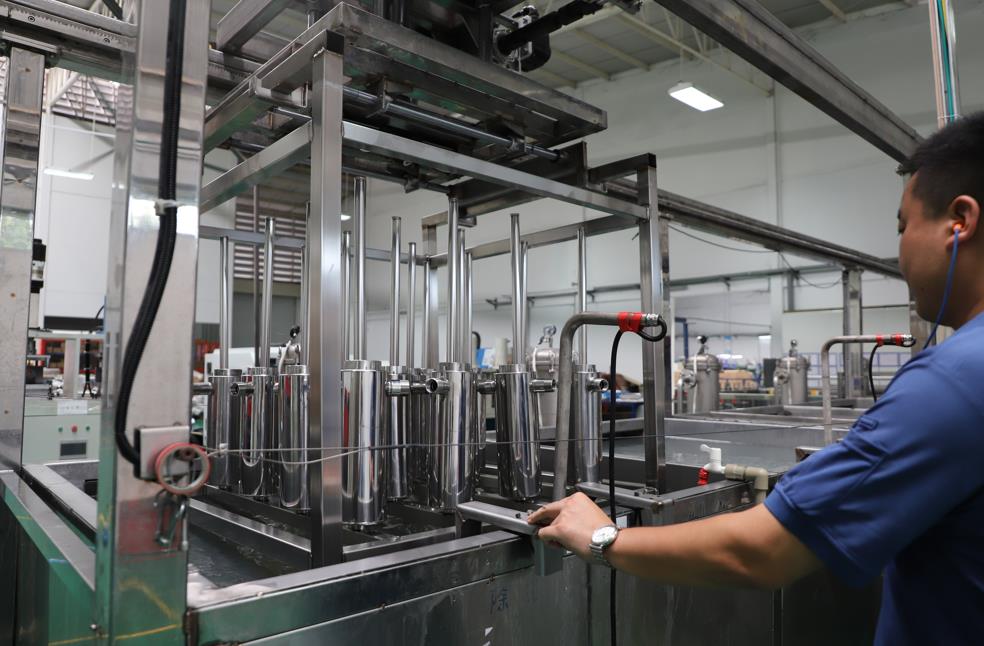
In recent years, automatic cleaning machines have transformed industrial cleaning standards. These systems integrate multiple processes—such as spraying, immersion, and drying—into a continuous automated workflow.
Key Features:
-
Programmable cleaning cycles
-
Integrated water recycling and filtration
-
Temperature and pressure control for consistent results
-
Inline drying to eliminate moisture before finishing
Compared to manual cleaning, automated systems minimize human error, reduce chemical waste, and improve operational efficiency—making them indispensable in modern sheet metal fabrication.
Metal Surface Finishing After Cleaning
Cleaning is only the first step toward achieving the desired metal surface finishing. Post-cleaning treatments prepare the surface for coating, painting, or plating.
Common finishing processes include:
-
Passivation: Removes free iron from stainless steel surfaces to enhance corrosion resistance.
-
Anodizing: Forms a protective oxide layer on aluminum parts.
-
Powder coating: Provides both aesthetic appeal and durable protection.
-
Electroplating: Adds a thin layer of metal for improved conductivity or appearance.
Each finishing process demands an exceptionally clean surface—otherwise, adhesion failures or coating defects can occur.
How to Choose the Right Cleaning Method
Choosing a cleaning method depends on multiple variables:
| Factor | Consideration |
|---|---|
| Material Type | Stainless steel, carbon steel, aluminum require different cleaning chemistries |
| Surface Finish | Mirror finish vs matte finish determines mechanical vs chemical cleaning |
| Geometry | Complex shapes may require immersion or ultrasonic cleaning |
| Production Volume | High-volume production favors automatic systems |
| Environmental Regulations | Solvent or acid cleaning may need closed-loop recycling systems |
Innovations in Automatic Sheet Metal Cleaning
Modern manufacturing emphasizes automation, sustainability, and data-driven quality control. Advanced automatic cleaning machines now integrate features such as:
-
Sensor-based monitoring: Detects contamination levels and adjusts cleaning parameters in real time.
-
Closed-loop filtration systems: Recycles water and chemicals to minimize environmental impact.
-
Robotic handling: Ensures consistent movement, reducing the risk of surface damage.
-
Smart drying technologies: Prevents water stains and oxidation during post-cleaning.
These innovations improve not only cleanliness but also production efficiency, aligning with Industry 4.0 principles.
Chuntian Technology: Advanced Sheet Metal Fabrication and Cleaning Solutions
Chuntian Technology (Thailand) Co., Ltd. is a leading precision manufacturing company specializing in sheet metal fabrication and intelligent cleaning systems.
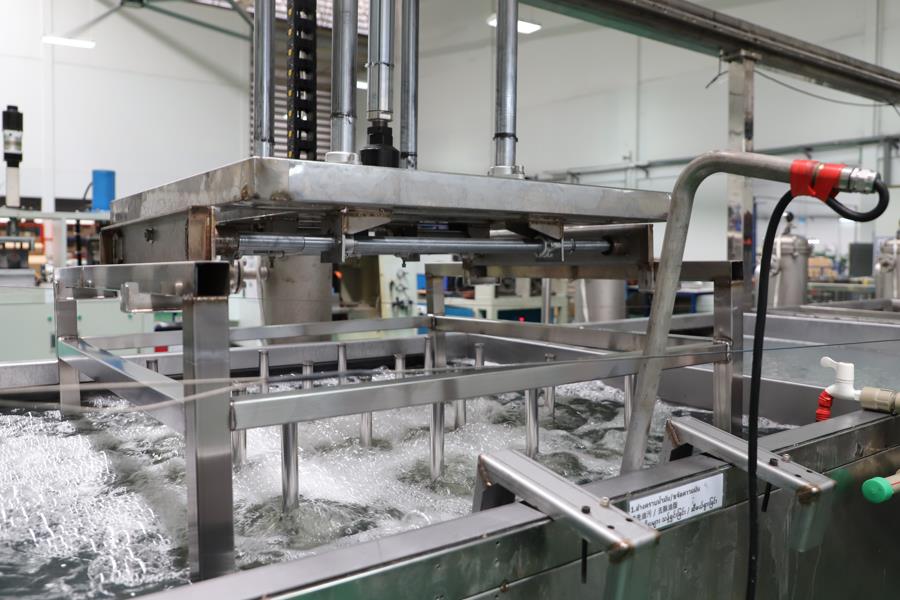
Over years of development, Chuntian has integrated full-process capabilities—from laser cutting, bending, and welding to automated cleaning and surface finishing. Recognizing the limitations of manual washing, our engineering team independently developed an in-house automatic sheet metal cleaning system designed for high-precision, high-volume production.
Key Features of CTT’s Automatic Cleaning Equipment:
-
Fully automated spray and immersion cleaning modules
-
Real-time monitoring of temperature, pressure, and contamination levels
-
Closed-loop filtration and eco-friendly wastewater recycling
-
Modular design adaptable to different part sizes and materials
This system not only ensures perfect cleanliness before coating or assembly but also enhances production consistency and environmental compliance.
With a focus on R&D innovation, Chuntian Technology continues to refine its manufacturing processes, delivering reliable, high-quality sheet metal components for clients worldwide.
If your business requires custom metal surface finishing or automatic cleaning solutions, Chuntian Technology provides the expertise, precision, and technology to meet your exact specifications.
Conclusion
From oil removal to oxide layer stripping, sheet metal cleaning is a cornerstone of quality assurance in fabrication. Selecting the right method—mechanical, chemical, ultrasonic, or automated—depends on part design, material, and end-use requirements.
With automation leading the next wave of industrial innovation, Chuntian Technology stands at the forefront, combining deep fabrication expertise with self-developed automatic cleaning systems that redefine surface quality and production efficiency.
FAQ
1. What is the best cleaning method for stainless steel sheet metal?
For stainless steel, alkaline degreasing followed by acid passivation provides optimal cleanliness and corrosion resistance without damaging the surface.
2. How does automatic cleaning improve product quality?
Automatic systems deliver consistent cleaning results by controlling temperature, pressure, and detergent concentration, ensuring uniform surface conditions for coating or assembly.
3. What are the common challenges in cleaning large sheet metal components?
Large parts often face uneven cleaning coverage and drying issues. Automatic systems with multi-nozzle configurations and integrated drying solve these problems efficiently.
4. Is ultrasonic cleaning suitable for industrial-scale sheet metal parts?
While ultrasonic cleaning excels for small precision parts, large-scale operations typically rely on automated spray or immersion systems for better throughput.
5. Does Chuntian Technology offer custom cleaning solutions for specific applications?
Yes. Chuntian Technology designs and manufactures customized automatic cleaning machines tailored to material type, part geometry, and industry requirements, ensuring maximum efficiency and reliability.