

Metal materials occupy a pivotal position in modern industry, so how are metals processed? This involves a series of complex and diverse processes.
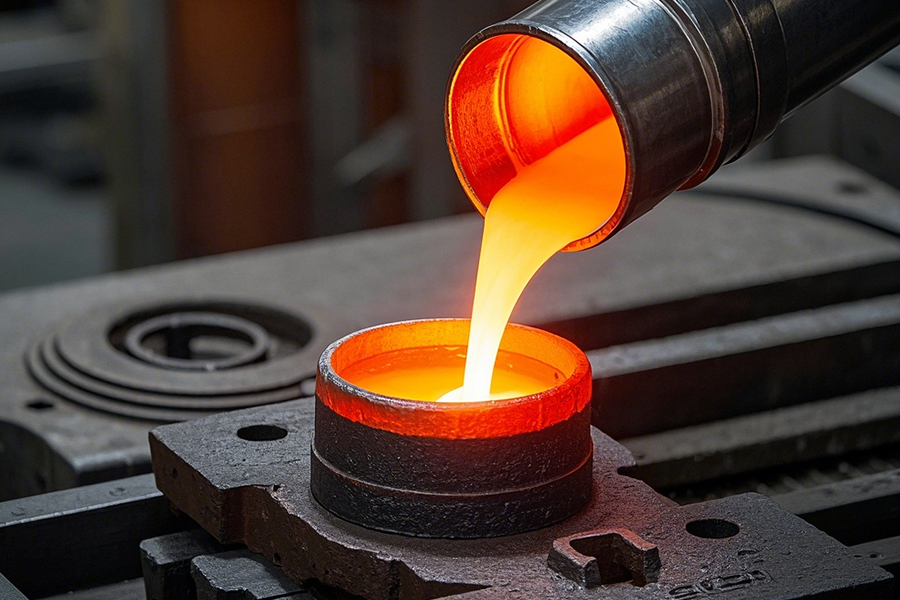
The first is the casting process. Casting is a method of pouring liquid metal into a pre-designed mold and obtaining metal parts or blanks with a certain shape and size after it cools and solidifies. For example, in the manufacture of automobile engine cylinders, the casting process is often used. First, a sand mold is made according to the shape of the cylinder, and then the molten metal liquid (such as aluminum alloy or cast iron) is injected into the mold cavity. After cooling, demolding and other processes, the preliminary cylinder blank is obtained. In this process, there are strict requirements on the temperature, composition and pouring speed of the molten metal to ensure the quality of the casting and avoid defects such as pores and shrinkage cavities. Chuntian Machinery has a professional technical team in casting technology, which can accurately control various parameters in the casting process and produce high-quality cast metal parts.
The forging process uses a forging machine to apply pressure to the metal blank to cause it to undergo plastic deformation to obtain forgings with certain mechanical properties, shapes and sizes. Forging is often required to improve the strength and toughness of parts such as aircraft landing gear and shaft parts of large machinery. During the forging process, the internal grain structure of the metal billet is improved under the action of hammering or pressure, and the fiber structure is distributed along the force direction, so that the mechanical properties of the parts are significantly improved. Chuntian Machinery’s forging equipment is equipped with a high-precision pressure control system. The technicians reasonably formulate forging process regulations according to the requirements of different metal materials and parts to ensure the stable and reliable quality of forgings.
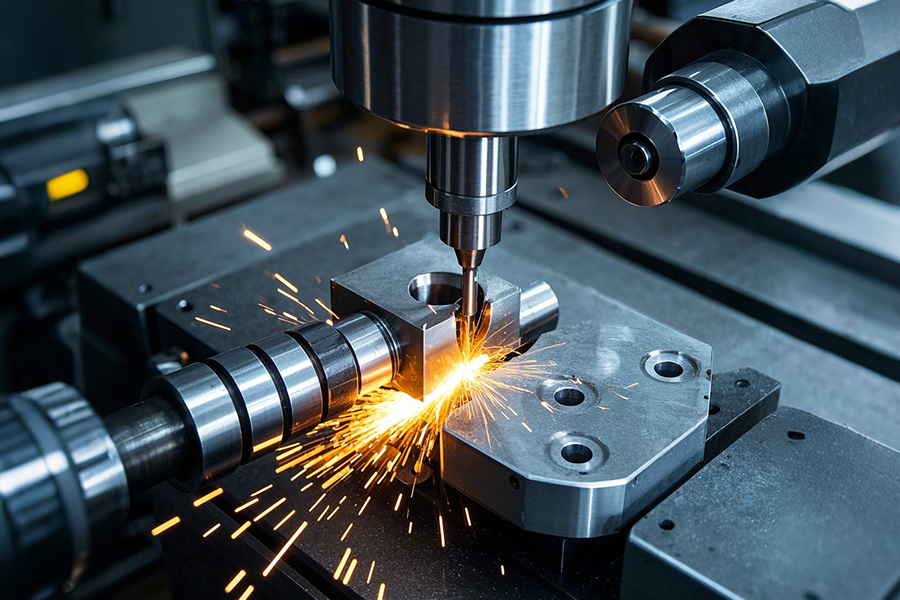
Metal cutting is one of the most common processing methods. Through various machine tools, such as lathes, milling machines, drilling machines, grinders, etc., metals are cut with tools to remove excess materials to achieve the shape and precision required by the design. For example, in the manufacture of precision mechanical parts, lathes can turn cylindrical metal billets into various shaft parts, and by controlling parameters such as cutting speed, feed rate and cutting depth, the dimensional accuracy and surface roughness of the parts can be precisely controlled. Milling machines can perform operations such as plane milling and contour milling on metal surfaces to process parts with complex shapes. Chuntian Machinery has introduced advanced CNC cutting machine tools, which, combined with high-precision tools and professional programming technology, can efficiently complete various metal cutting tasks and meet the requirements of different customers for the precision and quality of metal parts.
Welding technology is also an indispensable part of metal processing. It is a way of connecting two or more metal parts by heating, pressurizing or both, with or without filler materials, so that the weldment can achieve atomic bonding. It is widely used in the assembly links of building steel structures, pipeline installation and machinery manufacturing. For example, in bridge construction, a large number of steel beams are connected into an integral structure by welding. The key to the welding process is to select appropriate welding methods (such as manual arc welding, gas shielded welding, laser welding, etc.) and welding parameters to ensure the strength, sealing and aesthetics of the welded joint. Chuntian Machinery’s welding technicians are proficient in a variety of welding processes and can formulate scientific welding plans to ensure welding quality according to the types of metal materials and the requirements of weldments.
In addition, there is also a heat treatment process for metals. By heating, insulating and cooling the metal, the metal’s organizational structure and properties are changed to improve its hardness, strength, toughness, wear resistance, etc. For example, quenching and tempering the tool can improve its hardness and wear resistance and extend its service life. Chuntian Machinery is equipped with professional heat treatment equipment and strictly treats metal parts in accordance with the heat treatment process specifications, so that the metal parts can have better comprehensive performance after processing and meet the use requirements of various complex working conditions.
Metal processing is a multi-process collaborative process, including casting, forging, cutting, welding and heat treatment. With its professional technology and advanced equipment in various process links, Chuntian Machinery can provide high-quality metal processing services for many industries and promote the continuous development and innovation of metal processing technology in modern industry.