

As a core non-traditional machining technology in precision manufacturing, electrical discharge machining (EDM) not only possesses unique processing characteristics but also demonstrates irreplaceable core advantages in practical applications, becoming an essential process in high-end precision manufacturing fields such as mold making, aerospace, and medical devices. The second part of this article will focus on the core advantages and practical application scenarios of EDM, providing a comprehensive understanding of its practical value in precision manufacturing.
The Core Advantages of Electrical Discharge Machining in Precision Manufacturing
Compared to traditional cutting processes, electrical discharge machining (EDM) demonstrates significant and irreplaceable core advantages in precision manufacturing scenarios such as machining superhard materials, complex structures, and micro-components. It perfectly meets the processing needs of high-end precision manufacturing, which is the key reason why it has become a core process in precision manufacturing. These advantages can be summarized into five main points:
- Breaking through material hardness limitations, adapting to commonly used superhard materials in high-end manufacturing: It completely solves the industry pain points of traditional cutting processes for superhard and high-strength materials, such as “difficult cutting, rapid tool wear, and low machining accuracy.” It can process various conductive superhard materials without tool wear during the process, maintaining stable machining accuracy over a long period. It eliminates the need for frequent tool changes and equipment adjustments, significantly improving processing efficiency and perfectly meeting the material requirements of precision manufacturing fields such as aerospace and mold manufacturing.
- Complex structures can be formed in one step, reducing machining difficulty and production cycle: For complex cavities, irregular holes, narrow slits, and other structures that require multiple processes and clamping operations in traditional cutting processes, EDM can achieve one-step forming using customized electrodes. This reduces process connections and clamping operations, effectively avoiding positioning errors caused by multiple clamping operations, while significantly shortening the production cycle and reducing the machining difficulty and manufacturing cost of complex precision structures.
- Forceless machining ensures the dimensional and positional accuracy of easily deformable parts: For thin-walled, slender, and tiny easily deformable parts in precision manufacturing, the forceless nature of EDM fundamentally avoids workpiece deformation and warping during machining. It can accurately guarantee the dimensional accuracy and dimensional and positional tolerances of parts, which is difficult to achieve with traditional cutting processes and is its core competitive advantage in the machining of micro-precision parts.
- Ultra-precision machining capabilities meet the demands of micro/nano-level precision manufacturing: Leveraging continuous upgrades in CNC technology, pulse power supply technology, and electrode material technology, electrical discharge machining (EDM) can achieve ultra-precision machining at the micron or even sub-micron level. It can fabricate micro- and nano-scale structures such as micro-holes, micro-slits, and micro-cavities, meeting the “ultra-precision, miniaturized” machining requirements of semiconductors, precision instruments, and medical devices. It is a crucial technological means for realizing micro/nano precision manufacturing.
- High process flexibility adapts to customized, small-batch production needs: The electrode design and fabrication in EDM are relatively flexible. Electrodes can be quickly designed and manufactured according to customer customization requirements, enabling small-batch, customized precision component machining. This perfectly matches the characteristics of multi-variety, small-batch customized production in the precision manufacturing field. Furthermore, the electrodes are reusable, further reducing the overall cost of small-batch, customized production.
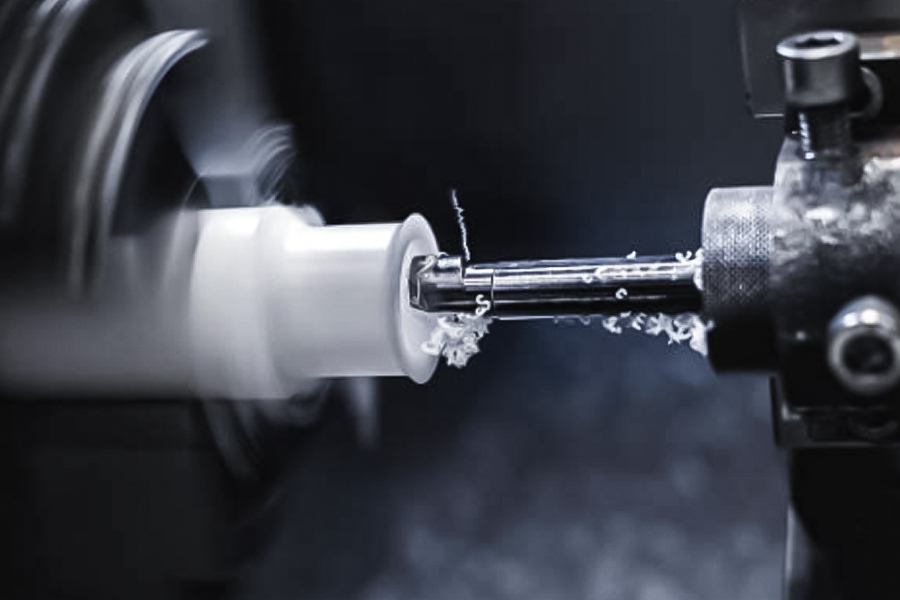
Core Application Scenarios of Electrical Discharge Machining (EDM) in Precision Manufacturing
With its core advantages such as non-contact machining, compatibility with ultra-hard materials, and high-precision forming, EDM has become an essential process in precision manufacturing. It is widely used in five high-end fields: mold manufacturing, aerospace, medical devices, semiconductors, and precision instruments. It plays an irreplaceable role in the processing of core precision components in each field, driving the development of high-end precision manufacturing:
- Mold Manufacturing: The Most Core Application Scenarios: This is the most important and mature application area for EDM, primarily used for processing complex cavities, cores, cutting edges, and irregular holes in injection molds, stamping molds, and die-casting molds. Mold manufacturing demands extremely high machining accuracy and surface quality. Mold cavities are often complex curved surfaces, and the materials are mostly hardened steel and cemented carbide. EDM can precisely achieve the forming of these cavities, ensuring the accuracy and service life of the mold. It is the core process of precision mold manufacturing, without exception.
- Aerospace: Machining of Complex Structures in Ultrahard Materials: Used for machining complex irregular holes, narrow slots, deep grooves, and cavities in core components such as aero-engine blades, turbine disks, and precision aerospace structural parts. Aerospace components often utilize ultrahard materials like titanium alloys and high-temperature alloys, and their complex structures and high precision requirements make them difficult to machine using traditional cutting processes. Electrical discharge machining (EDM) easily addresses both the material and structural challenges, ensuring precise forming and optimal performance.
- Medical Devices: Machining of High-Precision Micro-Components: Used for machining precision structures in surgical instruments, implantable medical devices (artificial joints, dental implants), and core components of medical testing equipment. Medical device components require high precision and high surface quality, and some are micro-sized and complex structures. The cutting force-free and ultra-precision machining characteristics of EDM enable micro-nano-level precision machining while ensuring surface smoothness, meeting the requirements of medical device use and biocompatibility.
- Semiconductor: Machining of Micro-Nano-Level Precision Structures: Used for machining micro-holes, micro-slits, and precision cavities in components such as semiconductor chip manufacturing equipment, wafer carriers, and precision connectors. In the semiconductor industry, the precision requirements for processing reach the sub-micron level. Electrical discharge machining (EDM) offers ultra-precision machining capabilities that precisely match these needs, making it a crucial process for achieving micro-nano-level structure fabrication in semiconductor precision manufacturing.
- In the precision instrument field: Machining of tiny and complex components: Used for machining tiny and complex precision components for optical instruments, measuring instruments, watch movements, and other precision instruments. Examples include miniature gears, irregularly shaped shafts, precision hole systems, and micro-cavities. These components are small in size and require high precision, making high-precision forming difficult with traditional cutting processes. EDM enables deformation-free, high-precision machining, ensuring the measurement accuracy and operational stability of precision instruments.
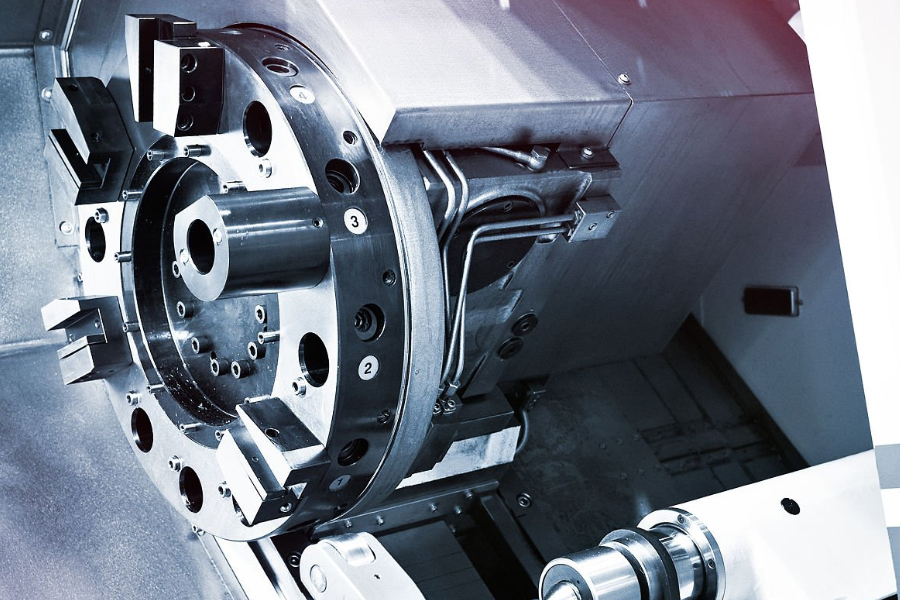
In summary, as precision manufacturing evolves towards “ultra-precision, micro-nano, customized, and high-end” applications, EDM, with its unique “electro-etching” processing principle, overcomes many limitations of traditional cutting processes in terms of material hardness, structural complexity, and machining precision. With its core advantages of non-contact machining, compatibility with ultra-hard materials, high-precision forming, and complex structure machining, it has become an indispensable key process in precision manufacturing.
From complex cavities in mold manufacturing to ultra-hard material structural components in aerospace, and micro-nano-level precision parts in semiconductors and medical devices, electrical discharge machining (EDM) plays an irreplaceable role in various high-end precision manufacturing fields, providing core technological support for achieving “precision forming of difficult-to-machine materials and efficient machining of complex structures.” With the continuous upgrading of CNC technology, pulse power supply technology, and electrode material technology, the machining accuracy, efficiency, and flexibility of EDM will continue to improve, and its application scenarios will be further expanded, becoming an important force driving the precision manufacturing industry towards a higher level and greater intelligence.